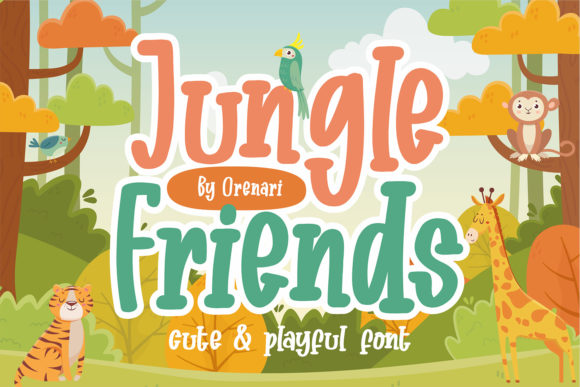
Jungle Friends Font for Web Design
Working on a boutique online store, I needed a font that felt approachable and lively. Jungle Friends caught my eye as a display font with a friendly vibe. Its playful curves and soft edges made it perfect for headers and call-to-action buttons.
Testing Jungle Friends in the hero section of the site, I noticed how it stood out without overwhelming the design. The font’s personality added a sense of warmth, making the brand feel more inviting. It worked well over a background image, where its legibility wasn’t compromised by the visual noise.
Visual Characteristics and Digital Appeal
Jungle Friends has a hand-drawn aesthetic that feels both modern and nostalgic. Its strokes are slightly irregular, giving it a handmade quality that adds character to any layout. This makes it ideal for creative portfolios, blog headers, or social media graphics where a personal touch is important.
The font’s versatility allows it to fit into various digital environments. Whether used for a product landing page headline or a coaching website’s section title, it maintains a consistent visual identity. Its friendly tone aligns well with brands targeting a younger, creative audience.
Use Cases in Web Design
I used Jungle Friends for a course sales page, where it served as the main headline. Its boldness helped draw attention without being too aggressive. Pairing it with a clean sans serif font for body text created a balanced contrast, ensuring readability while keeping the design cohesive.
On a promotional landing page, I applied Jungle Friends to the primary CTA button. The font’s unique shape made the button visually distinct, encouraging users to take action. It also worked well as a decorative accent in the footer, adding subtle personality without distracting from the content.
Readability and User Experience
When testing Jungle Friends on mobile screens, I found it remained legible at smaller sizes, especially when used for short phrases or headings. On dark backgrounds, it maintained good contrast, but I avoided using it for long paragraphs due to its decorative nature.
For responsive layouts, I kept the font limited to larger text sizes, ensuring it didn’t interfere with the overall flow. When placed over images, I adjusted the opacity slightly to maintain clarity, which helped the text stand out without overpowering the visuals.
Font Pairing and Design Balance
Pairing Jungle Friends with a simple sans serif font like Roboto or Open Sans created a clean and professional look. This combination worked well for a portfolio homepage, where the display font highlighted key sections while the body text provided easy reading.
For a more editorial feel, I paired it with a serif font like Lora. This gave the design a refined edge, suitable for a blog redesign or a digital brand kit. The contrast between the two fonts enhanced the visual hierarchy without clashing.
Practical Considerations for Web Use
Before implementing Jungle Friends, I checked the available styles and webfont formats. The font came in multiple weights, allowing me to use it flexibly across different design elements. Its multilingual support was a plus, ensuring it worked well for international audiences.
I also verified the commercial licensing terms to make sure it was suitable for the project. Since the font was intended for a client’s online store, having clear usage rights was essential. The file formats included WOFF and TTF, which are standard for web use and compatible with most platforms.
Final Thoughts on Jungle Friends
Jungle Friends is a great choice for designers looking to add a friendly, expressive touch to their websites. Its balance of style and usability makes it ideal for headers, buttons, and short phrases. While not suited for body text, it excels in areas where visual appeal and personality matter most.
Whether you're working on a creative portfolio, an online shop, or a digital campaign, Jungle Friends offers a fresh and engaging way to enhance your brand’s visual identity. Its charm and flexibility make it a valuable addition to any designer’s toolkit.